Our group differences forum in our class was very interesting. I really enjoyed hearing everyone's opinions and thoughts. It brought up many different topics that we have to consider as we prepare to be teachers. Religion, multiculturalism, poverty, gender, immigration, and disabilities are all very important topics to discuss. I loved that every one did not necessarily agree with the articles that they read for each subject. I think the subject that was most eye opening for me was gender. It was not something I ever really thought about apart from the discussion. I feel like our program has prepared us really well to be aware of these topics, but I do agree that we should have a class to prepare us for how to help our ELL students.
From what we were told about the articles, I do not think any of the articles should be thrown out. They were all helpful and brought up good points. I really liked our Kill Santa article; I was sad we ended up not having that much time to discuss it. I think all of the topics are really important to discuss because they are all aspects of the classroom that we will more than likely have to deal with.
Thursday, April 25, 2013

Sunday, April 21, 2013
Barb Rentenbach Reflection
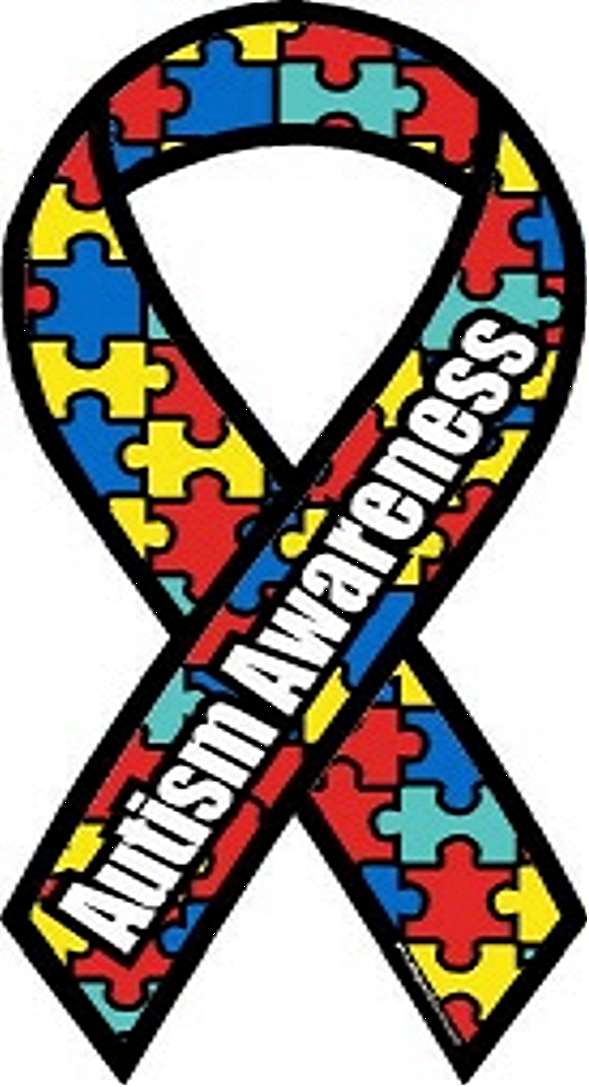
I wish I could have seen Barb Rentenbach in person,
but I enjoyed watching these videos. It
was very relevant to me because I work with two kids that have autism. They can communicate, but mostly with one- or
two-word utterances. I could relate some
of the things Barb mentioned in her book that the people were reading to my
experiences with these kids at work. For
example, one of them likes to carry stuff around with him. Usually it is a book, or toy, but her
statement about sometimes liking to carry objects (like a bowl of nuts and
bolts) made me think about that. I
really liked how she talked about it is harmless. If they are never using it to cause harm,
then why would we take away a piece of their comfort? I am sure that happens sometimes. One way I can better teach children that have
autism in my classroom is by not stressing over the little stuff like
that. I thought facilitated
communication was very interesting. I
love hearing about ways that we allow people who may not speak to communicate
with us (another example is with iPads).
I wondered why one or two of the people in the Here We Are World video
used it though when they were the ones speaking what they wrote. It is so exciting to see that though,
because before they had that to communicate, I’m sure it was extremely
frustrating. I loved that Barb
Rentenbach said not to shelter kids that use facilitated communication. I think this is important to remember with
all of my students; sometimes I underestimate what they are capable of. Students that do not have autism and students
with autism need to be challenged and I need to have high expectations for
them, while still being sensitive to their needs. I also took to heart what she said about
interacting with them. She said nobody
likes to be talked at and sometimes they just want people to be there but not
talk. I am definitely someone who likes
to talk to fill the silence, more particularly with people I do not know very
well. I find myself doing that with the
kids at work that have autism. I will
remember that maybe they just want me to sit with them, but not constantly be
trying to talk to them. This is
something I will take with me into teaching as well. These videos did affect my view of people
with autism in positive ways. They made
me more aware of ways to better communicate with them and interact with
them. I think it is important for all
people to be educated about autism. This
month is actually autism awareness month and we just had autism awareness week
at work. This is good because the
students better understand why a couple of them are different, but still
capable of the same things as them. All
teachers should be educated on autism so that they can better teach students
with autism and adjust the environment to help them be comfortable.
Wednesday, April 10, 2013
Chapter 2--Post #10
Theories in educational psychology promote the idea that language plays a
critical role in cognitive development. Examine Table 2.2 (p. 51), paying
particular attention to the age range that you are interested in teaching.
Consider how you might incorporate or adapt the strategies presented for
use with your own students.
I chose the K-2 grade level and looked at the suggested strategies for linguistic development. At this age, they need to be reading age-appropriate storybooks to enhance their vocabulary. It is important that they read something a little bit challenging but on their reading level because it will boost their confidence when they can read the whole book. I will have books in my classroom that they can choose from, but more importantly I will make sure they go to the library and check out books labeled with their reading level. I also think read-alouds are so important. I plan to read-aloud to my students everyday in my classroom. This will help them work on their listening skills. This is also a great way for them to hear stories that they might not have been able to read on their own. I will also have my students write about their weekends or special events that I know they have gone to. By doing this, they can tell their stories without being disruptive (every Monday my Kindergarteners at work are ALL trying to tell me about their weekend at once) and they will be practicing writing in a way that they hopefully enjoy.
As we progress throughout the year, I will always give corrective feedback when I can tell a student doesn't understand a word or is misusing. This is important because they will keep using the word incorrectly if I don't correct them, and the longer they use the word incorrectly the harder it will be to change. I will also ask questions to check for comprehension. I have observed teachers that give instructions and then ask for the students to repeat it back when they are done; I like this idea not only with instruction. It helps the teacher know whether the students are understanding.
Since I talked about read-alouds, I wanted to include this website. It is readaloudamerica.org and it has lists of books that are suggested for reading aloud. There is a list for each year. It is a very helpful website because the lists are also divided into sections by age/grade level.
I chose the K-2 grade level and looked at the suggested strategies for linguistic development. At this age, they need to be reading age-appropriate storybooks to enhance their vocabulary. It is important that they read something a little bit challenging but on their reading level because it will boost their confidence when they can read the whole book. I will have books in my classroom that they can choose from, but more importantly I will make sure they go to the library and check out books labeled with their reading level. I also think read-alouds are so important. I plan to read-aloud to my students everyday in my classroom. This will help them work on their listening skills. This is also a great way for them to hear stories that they might not have been able to read on their own. I will also have my students write about their weekends or special events that I know they have gone to. By doing this, they can tell their stories without being disruptive (every Monday my Kindergarteners at work are ALL trying to tell me about their weekend at once) and they will be practicing writing in a way that they hopefully enjoy.
As we progress throughout the year, I will always give corrective feedback when I can tell a student doesn't understand a word or is misusing. This is important because they will keep using the word incorrectly if I don't correct them, and the longer they use the word incorrectly the harder it will be to change. I will also ask questions to check for comprehension. I have observed teachers that give instructions and then ask for the students to repeat it back when they are done; I like this idea not only with instruction. It helps the teacher know whether the students are understanding.
Since I talked about read-alouds, I wanted to include this website. It is readaloudamerica.org and it has lists of books that are suggested for reading aloud. There is a list for each year. It is a very helpful website because the lists are also divided into sections by age/grade level.
Tuesday, March 19, 2013
Social Cognitive Theory
How might self-efficacy and self-regulation contribute to the intervention
plans you use in your case study?
Self-efficacy and self-regulation are two concepts that I would definitely want to consider with my intervention plans for the case study (see below in last post) because I really like Social Cognitive Theory (SCT). I believe that self-efficacy is a big factor in learning and behavior. If a student believes they can do something, they are more likely to do it. If they don't think they can do something then they are less likely to do it. I would take into account whether or not Lisa thinks she can accomplish the task or not. It might be the academic task that she may or may not think she can do, or it might be just working with partners. I would try to talk with Lisa and help her see that she can work with groups effectively. If I can get her to believe this, then she might be more willing to work nicely with the others.
Self-regulation goes along with my journaling idea. If Lisa is reflecting on her learning, then she can realize what she is doing wrong and work on fixing it. If she reflects in her journal about how she didn't really work well with the group, she might be motivated to try again. The same goes for when Lisa does something good. If she writes in her journal that she worked well with others, she might be motivated to do it again because of the results. Lisa can also self-regulate by talking to me. I can ask her questions about her behavior and learning and through her answers she can reflect. This is probably what I would do before she starts journaling so she will be familiar with reflecting.
This video below explains self-efficacy very well and is very informative.
Self-efficacy and self-regulation are two concepts that I would definitely want to consider with my intervention plans for the case study (see below in last post) because I really like Social Cognitive Theory (SCT). I believe that self-efficacy is a big factor in learning and behavior. If a student believes they can do something, they are more likely to do it. If they don't think they can do something then they are less likely to do it. I would take into account whether or not Lisa thinks she can accomplish the task or not. It might be the academic task that she may or may not think she can do, or it might be just working with partners. I would try to talk with Lisa and help her see that she can work with groups effectively. If I can get her to believe this, then she might be more willing to work nicely with the others.
Self-regulation goes along with my journaling idea. If Lisa is reflecting on her learning, then she can realize what she is doing wrong and work on fixing it. If she reflects in her journal about how she didn't really work well with the group, she might be motivated to try again. The same goes for when Lisa does something good. If she writes in her journal that she worked well with others, she might be motivated to do it again because of the results. Lisa can also self-regulate by talking to me. I can ask her questions about her behavior and learning and through her answers she can reflect. This is probably what I would do before she starts journaling so she will be familiar with reflecting.
This video below explains self-efficacy very well and is very informative.
Wednesday, March 13, 2013
Behaviorism--Post #8

Consider your CSEL intervention case study. Are there tools from a behaviorist view for either encouraging productive behaviors or discouraging undesirable behaviors that you could apply to the case? What are they?
Now, compare the interventions that you have identified above with what you think might work from a cognitive or constructivist viewpoint (you may need to Google for ideas but it's okay to just speculate based on your prior knowledge). How do they compare to behaviorist tools? What are the benefits of each theory, and what are the deficits? Which theory might play a larger role in how you determine classroom management?
Here is my case study:
You engage your third grade students in cooperative learning
activities at least twice a day, changing heterogeneous group members once
every four weeks. You have agreed upon routine procedures that your classroom
community uses within their small groups, including the roles and
responsibilities of group members. Lately you have noticed that one small group
always seems to have difficulty grasping material and completing their project
in an acceptable manner. You observe
this group carefully and find that Lisa seems to be the catalyst for their
problems. She gets angry with others if
she does not get the job she wants and refuses to do her part in contributing
to the group’s learning. She constantly
interrupts others in her group. She does
not pay attention when her group prepares for class presentations.
The first step that I would take to help Lisa would be to first model successful group behavior. This can be modeled for the whole class so that she doesn't feel singled out and because it would be beneficial for the whole class anyways. I would pick some students that I know work well in a group and model great group behaviors in front of the class. The second step I would take to help Lisa is to use positive behavioral support. Using PBS would teach Lisa different behaviors to replace the inappropriate behaviors. This encourages the right type of behavior in group work as well as encourages her to stop the bad behavior at the same time in order for their group to work together better.
From a constructivist approach, I would have Lisa reflect on her behavior maybe by writing in a journal. Then once she has had some time removed from the group, we can discuss her reflection. By doing this, she can construct right and wrong behaviors by reflecting. This is similar to behaviorism because we are still trying to address the behavior and change it, just in a different manner.
I think there are benefits and deficits to both approaches. They both identify what the inappropriate behavior is, but I feel like Lisa is more aware of what it is in the constructivist approach because she reflects on it. With PBS, her awareness might not be as direct. With both of them, the behavior will be hard to change. PBS is a great way to work towards discouraging and replacing the inappropriate behavior. I think behaviorism will play a larger role in my classroom management because I know more about it (I am a psychology major) and its focus is on behavior. It provides many ways on top of PBS (applied behavior analysis, operant conditioning, etc.) to help with behavior.
Click here for helpful behavior modifications. It goes through the steps of PBS and is very helpful.
Tuesday, March 5, 2013
Post #7
Choose one of the following:
Consider a lesson plan you might use. Which metacognitive skills/abilities
are involved as students gain facility/knowledge in this domain?
OR
Think of an activity or lesson component that explicitly teaches one or
more metacognitive and one or more problem solving skills.
We used an activity for our teaching project last week that teaches metacognitive and problem solving skills. It would have to be used with upper elementary because it involves division. We had a recipe for peach cobbler that served 100 people; however, we were only going to serve 25 people. We divided our classmates into groups and they had to figure out how much of each item we needed to serve just 25 people. This was an example of transfer; they were using math and prior learning that helped in a new situation. This also was great problem solving because they had to work through the problem and decide how much of each ingredient they need and the math helped them do that. I think this is a great activity that could be used with upper elementary students who have just learned division.
I really like this video below. It talks about teaching kids to think about their thinking with a simple example and explanation.
We used an activity for our teaching project last week that teaches metacognitive and problem solving skills. It would have to be used with upper elementary because it involves division. We had a recipe for peach cobbler that served 100 people; however, we were only going to serve 25 people. We divided our classmates into groups and they had to figure out how much of each item we needed to serve just 25 people. This was an example of transfer; they were using math and prior learning that helped in a new situation. This also was great problem solving because they had to work through the problem and decide how much of each ingredient they need and the math helped them do that. I think this is a great activity that could be used with upper elementary students who have just learned division.
I really like this video below. It talks about teaching kids to think about their thinking with a simple example and explanation.
Monday, February 25, 2013
Constructivism
Make a list of the sequence of skills necessary for ultimate mastery of the
content of your lesson through a constructivist approach.
Which of these learning activities/skills lend themselves to student’s
individual or group construction? How might you structure learning
activities that lead students to discover these skills/these principles?
In class my group decided to do a vocabulary lesson for Kindergarten on color words. I turned my sheet in so I don't remember exactly what we came up with. My plans for vocabulary once I have my own classroom is to have a vocabulary activity each day. Monday, I will introduce the vocabulary words and give them definitions. It would be hard to give definitions for color words so I would maybe just go over each word and show them what the color looks like. Tuesday, I would provide an activity that helps them practice writing the words, like a crossword activity. They could work with a partner to complete it. Wednesday, I would give them a worksheet like this one to work on knowing what the color is by looking at the vocabulary words. Thursday, I would have them participate in a group activity. I would have the groups walk around the school (inside or outside on the playground) and do a color scavenger hunt. I would either give them cameras if I could or have them write down what they found (when they are able to do that, I'm not sure when Kindergarteners can write well enough to do that). Then on Friday I will give them a quiz to test their knowledge of spelling the color words and recognizing what color goes with each color word. Hopefully through all the activities I provide throughout the week they will gain an understanding of the color words so that they know them by Friday. These activities incorporate individual work and group work to help them gain a better understanding.
Below is a video of some 4th and 5th grade students participating in a social studies activity. You can see and hear from the students how much more effective the activities they are participating in are than just answering questions in a textbook.
In class my group decided to do a vocabulary lesson for Kindergarten on color words. I turned my sheet in so I don't remember exactly what we came up with. My plans for vocabulary once I have my own classroom is to have a vocabulary activity each day. Monday, I will introduce the vocabulary words and give them definitions. It would be hard to give definitions for color words so I would maybe just go over each word and show them what the color looks like. Tuesday, I would provide an activity that helps them practice writing the words, like a crossword activity. They could work with a partner to complete it. Wednesday, I would give them a worksheet like this one to work on knowing what the color is by looking at the vocabulary words. Thursday, I would have them participate in a group activity. I would have the groups walk around the school (inside or outside on the playground) and do a color scavenger hunt. I would either give them cameras if I could or have them write down what they found (when they are able to do that, I'm not sure when Kindergarteners can write well enough to do that). Then on Friday I will give them a quiz to test their knowledge of spelling the color words and recognizing what color goes with each color word. Hopefully through all the activities I provide throughout the week they will gain an understanding of the color words so that they know them by Friday. These activities incorporate individual work and group work to help them gain a better understanding.
Below is a video of some 4th and 5th grade students participating in a social studies activity. You can see and hear from the students how much more effective the activities they are participating in are than just answering questions in a textbook.
Monday, February 18, 2013
Effective Instruction

How might your knowledge of the memory processes guide your instructional decisions?
I somewhat addressed how I would adjust my instruction based on what I have learned about memory processes in my last post. One thing that I would make a priority in my instruction is to present the connection between the material and the real world. I would also try to relate the new material to topics we have covered in the past or that they might have learned in previous grades. I will also present the same material in different ways so that they learn it over time, rather than learning it one day and being tested on it a few days later. I will definitely utilize mnemonics in my instruction and teach useful mnemonics to my students. Hopefully by teaching them some mnemonics, they will be able to come up with their own to help them remember important information.
Sunday, February 17, 2013
Cognitive Learning Skills
What are the essential skills and/or learning outcomes you want your
students to know and be able to do that relate to cognitive learning?
I have been through many years of school and there is a lot of information that I have learned and been tested on that I could not recall and tell you about now. Is it not sad how much we learn but don't remember? There are several skills that I would like for my students to know in order to have the best learning outcomes that they can have. I want them to be able to remember as much of what I teach them as possible.
Many of my classes in college have seemed irrelevant to me. I often find myself asking, "when am I ever going to use this in real life?" Much of the information that I do not remember is information that I learned in those classes. If I do not see how the information is relevant to me or I cannot relate it to the real world, then I will not remember it. I feel that this is true for most students. One of the most important skills I can make sure my students know is how to relate what they are learning to real life. Part of that is the teacher's role when they begin the lesson. It is important for them to make the real-life connections so they will retain the information.
Another concept that builds off of that is constructivism. Students that use construction are more likely to remember information. This means that they are connecting what they are learning to previous knowledge and building off of it. This is also known as meaningful learning. This will be a very useful skill for them.
My main goal as a teacher will be to help my students store information in their long-term memory. I will need to teach them strategies for doing this. A lot of what I do not remember from college classes is what I memorized the night before a test. In order to store information in our long-term memories, we have to hear/see it numerous times and in multiple ways to effectively store it. When I am teaching, I will revisit the same information more than once before moving on to make sure that they are remembering it.
A very helpful method of storing information in our long-term memories is using mnemonics. Mnemonics are special memory tricks. One way to use mnemonics is by teaching a song to students. A great example of this is the ABC song that we all learn when we are little. Another example of mnemonics is My Very Educated Mother Just Served Us Nine Pizza Pies. Although this does not really work anymore because Pluto is not a planet, I learned this in elementary school to remember the planets and I still remember it to this day.
These are some skills that I want my students to know. Hopefully with their knowledge of these skills, most of what I teach them will stick with them for the rest of their lives. Here are a couple articles that have helpful mnemonics:
http://www.letkidslead.com/MemoryTricks.aspx
http://www.learninginfo.org/spelling-mnemonics.htm
I have been through many years of school and there is a lot of information that I have learned and been tested on that I could not recall and tell you about now. Is it not sad how much we learn but don't remember? There are several skills that I would like for my students to know in order to have the best learning outcomes that they can have. I want them to be able to remember as much of what I teach them as possible.
Many of my classes in college have seemed irrelevant to me. I often find myself asking, "when am I ever going to use this in real life?" Much of the information that I do not remember is information that I learned in those classes. If I do not see how the information is relevant to me or I cannot relate it to the real world, then I will not remember it. I feel that this is true for most students. One of the most important skills I can make sure my students know is how to relate what they are learning to real life. Part of that is the teacher's role when they begin the lesson. It is important for them to make the real-life connections so they will retain the information.
Another concept that builds off of that is constructivism. Students that use construction are more likely to remember information. This means that they are connecting what they are learning to previous knowledge and building off of it. This is also known as meaningful learning. This will be a very useful skill for them.
My main goal as a teacher will be to help my students store information in their long-term memory. I will need to teach them strategies for doing this. A lot of what I do not remember from college classes is what I memorized the night before a test. In order to store information in our long-term memories, we have to hear/see it numerous times and in multiple ways to effectively store it. When I am teaching, I will revisit the same information more than once before moving on to make sure that they are remembering it.
A very helpful method of storing information in our long-term memories is using mnemonics. Mnemonics are special memory tricks. One way to use mnemonics is by teaching a song to students. A great example of this is the ABC song that we all learn when we are little. Another example of mnemonics is My Very Educated Mother Just Served Us Nine Pizza Pies. Although this does not really work anymore because Pluto is not a planet, I learned this in elementary school to remember the planets and I still remember it to this day.
These are some skills that I want my students to know. Hopefully with their knowledge of these skills, most of what I teach them will stick with them for the rest of their lives. Here are a couple articles that have helpful mnemonics:
http://www.letkidslead.com/MemoryTricks.aspx
http://www.learninginfo.org/spelling-mnemonics.htm
Thursday, February 7, 2013
Assessment
Think
of a lesson plan from your licensure area. Knowing that assessment is
an integral part of teaching, explain at least four informal and formal
assessments that you will use in your lesson plan to provide you with
feedback and involve the students in assessing their own learning.
From what I have learned about assessment, I am going to use informal assessment as much as possible. I know that I have to use a lot of formal assessment because it is required, and I think it is good to use, but I think informal assessment is a lot more helpful because you can use it on a daily basis.
In the classroom I am observing, our teacher taught cause and effect relationships in small groups. I believe she had just introduced the topic the day before, so what we observed was her really trying to get them to grasp the concept. They read a picture book and she helped them identify a few cause and effect relationships. Then they had to write 3 cause and effect relationships on a sheet of paper that she took up. This was a great example of informal assessment to see if they understood the concept.
If I were the teacher and continued teaching cause and effect relationships, I think I would do another informal assessment by having them do an exit pass and giving me an example of a cause and effect relationship that they thought of themselves. The day after that, I might have them draw me a picture of a cause and effect relationship. This gives them a little creativity but still demonstrates whether or not they can come up with another cause and effect relationship on their own and represent it.
At the end of the week, I would have a formal assessment. I would have them read a picture book on their own and have them identify 5 cause and effect relationships. If they have truly grasped the concept, identifying 5 should not be a problem at all. This will show me whether they understand or if they are still having trouble.
Here is a helpful video I found about formal and informal assessment.
From what I have learned about assessment, I am going to use informal assessment as much as possible. I know that I have to use a lot of formal assessment because it is required, and I think it is good to use, but I think informal assessment is a lot more helpful because you can use it on a daily basis.
In the classroom I am observing, our teacher taught cause and effect relationships in small groups. I believe she had just introduced the topic the day before, so what we observed was her really trying to get them to grasp the concept. They read a picture book and she helped them identify a few cause and effect relationships. Then they had to write 3 cause and effect relationships on a sheet of paper that she took up. This was a great example of informal assessment to see if they understood the concept.
If I were the teacher and continued teaching cause and effect relationships, I think I would do another informal assessment by having them do an exit pass and giving me an example of a cause and effect relationship that they thought of themselves. The day after that, I might have them draw me a picture of a cause and effect relationship. This gives them a little creativity but still demonstrates whether or not they can come up with another cause and effect relationship on their own and represent it.
At the end of the week, I would have a formal assessment. I would have them read a picture book on their own and have them identify 5 cause and effect relationships. If they have truly grasped the concept, identifying 5 should not be a problem at all. This will show me whether they understand or if they are still having trouble.
Here is a helpful video I found about formal and informal assessment.
Thursday, January 31, 2013
Productive Learning Environment
Based on our readings and class discussion, how will you create a learning
environment that is conducive to learning? Now consider your CSEL case
study. Develop a full continuum of responses for dealing with the
misbehavior of your case.
 I really want my classroom to benefit my students' learning. I want my students to respect me, my students to respect each other, and I need to respect my students. It should be a safe place where my students are not afraid to talk and know that if they do speak, they will not get made fun of. This will make learning more productive. I also want to have an organized classroom. This will benefit me (so that I don't go crazy because I am slightly OCD) and it will benefit my students' productivity.
This is a good article about creating a conducive learning environment.
Here is my case study for my CSEL:
First to deal with this problem, I would talk with Lisa and her parents about this issue. It might be something that can be resolved by talking about it and reiterating the rules of respect in my classroom. If the problem still persists, I would try "circle time" with Lisa and her group members to try to resolve the issues between them so that they can begin to work together effectively. I would make sure they understand the rules of respect and how to live them out while we are in the classroom (and hopefully they would live them out outside of school as well). If Lisa still cannot seem to work in a group, I would probably make her work independently and see the guidance counselor to get to the root of the problem. Hopefully level one of intervention would stop the problem, but if not, I hope that it would be resolved by the end of all intervention.

This is a good article about creating a conducive learning environment.
Here is my case study for my CSEL:
Elementary Education
Case Study
You engage your third grade students in cooperative learning
activities at least twice a day, changing heterogeneous group members once
every four weeks. You have agreed upon routine procedures that your classroom
community uses within their small groups, including the roles and
responsibilities of group members. Lately you have noticed that one small group
always seems to have difficulty grasping material and completing their project
in an acceptable manner. You observe
this group carefully and find that Lisa seems to be the catalyst for their
problems. She gets angry with others if
she does not get the job she wants and refuses to do her part in contributing
to the group’s learning. She constantly
interrupts others in her group. She does
not pay attention when her group prepares for class presentations.
First to deal with this problem, I would talk with Lisa and her parents about this issue. It might be something that can be resolved by talking about it and reiterating the rules of respect in my classroom. If the problem still persists, I would try "circle time" with Lisa and her group members to try to resolve the issues between them so that they can begin to work together effectively. I would make sure they understand the rules of respect and how to live them out while we are in the classroom (and hopefully they would live them out outside of school as well). If Lisa still cannot seem to work in a group, I would probably make her work independently and see the guidance counselor to get to the root of the problem. Hopefully level one of intervention would stop the problem, but if not, I hope that it would be resolved by the end of all intervention.
Monday, January 21, 2013
Motivation

In my Reading Education class, I did my inquiry project on motivation to read. Some of what I found that helps motivate students to read can be applied to motivation to learn in general. Teachers must provide an environment that enhances learning, but I think the most important factor is student choice. This works for reading and for any other subject. If the students have a little bit of choice or a lot of choice in what they are doing to learn, they will be much more excited to participate and learn the material.
I think the most helpful theories of motivation are humanism and efficacy vs. value. Humanism is helpful because if our students are not getting the basic physiological needs or other needs, they are going to have a hard time learning because they will be distracted. If we can address those needs, they will be more willing to learn. I also think efficacy vs. value is helpful because students must see that the task/information will benefit them and believe that they can accomplish/learn it, and this comes with help from the teacher.
Here are some helpful articles related to motivation to read:
Gambrell, Linda
and Marinak, Barbara. (2009). “Reading Motivation: What the Research
Says.” Retrieved November 18, 2012. http://www.readingrockets.org/article/29624/
Gambrell, Linda
and Marinak, Barbara. (2009). “Simple Practices to Nurture the Motivation
to Read.” Retrieved November 18,
2012. http://www.readingrockets.org/article/29625/
“Motivating Kids
to Read.” Retrieved November 18,
2012. http://www.rif.org/us/literacy-resources/articles/motivating-kids-to-read.htm
This is also a helpful article on motivation in general:
Subscribe to:
Posts (Atom)